
Yates
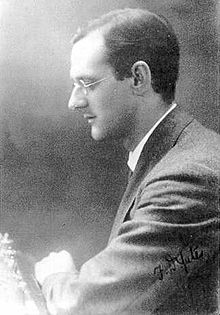
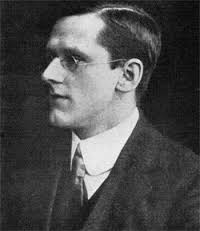
Frederick Dewhurst Yates (16 January, 1884 - 11 November, 1932) was an English chess Master. He won the British championship on six occasions. He started his career as an accountant, then became a professional chess player and journalist in 1909.
In 1911, he tied for the first place with Henry Atkins in the British championship, but lost the playoff, so he did not won the championship. In the following years, fate gave back what it took: in 1913, 1914, 1921, 1926, 1928 and in 1931 he also celebrated a championship title.
Despite of the convincing successes at national level, his results in international tournaments did not justice him. He won often against the strongest opponents, but in the end of the competitions he lost. It was particularly apparent at the Budapest tournament of 1926.
This form of depression was attributed to his poor health and loss of stamina. He suffered by persistent hacking cough, but, in lack of financial background, he did not spend a holiday in a warmer climate, as his doctor advised him. Moreover, he was subjected to journalistic pressure, reporting on the tournaments, in which he was playing. As a player he had not enough income to keep afloat. Many contemporaries believed that his talent could have placed him to the world champions, but the circumstances did not make it possible. However, he defeated several outstanding opponents; the most notable may be his triumph against Emanuel Lasker and José Raúl Capablanca.
At Karlsbad 1923 he defeated Alexander Alekhine, winning the brilliancy prize with his performance. The victory against Milan Vidmar at San Remo 1930 was regarded by Alekhine as the finest game played since the war.
As a journalist, he was the chess columnist of the Manchester Guardian, and he cooperated with William Winter in writing the Modern Master Play (1929).
He represented England in three Chess Olympiads. On each occasion he had a plus score and at London 1927 he won a team bronze medal.
Inside the British islands, he won at Glasgow 1911, then, at Cheltenham 1913; Chester 1914; Malvern 1921; Edinburgh 1926 and at Tunbridge Wells 1927 he finished first place.
Outside the islands, he tied for first place with Savielly Tartakower at Kecskemét (B final, 1927), earned fifth place at San Remo 1930. He finished second behind Tartakower at Gent 1926.
His highest rating was 2596 according to the Chessmetrics.
Sources: https://en.wikipedia.org; http://www.chessmetrics.com