
Schlechter
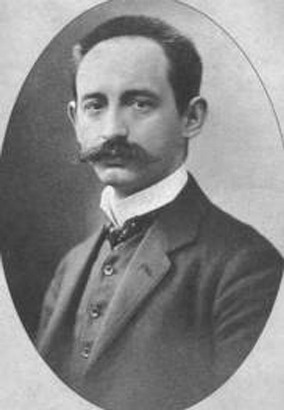
Carl Schlechter (2 March 1874 – 27 December 1918) was a leading Austrian chess master and theoretician at the turn of the 20th century. He is best known for drawing a World Chess Championship match with Emanuel Lasker.
Schlechter was born into a Catholic family in Vienna. He is sometimes deemed to be Jewish, although others dispute this. He began playing chess at the age of 13. His first and only teacher was an Austria-Hungarian chess problemist, Dr. Samuel Gold.
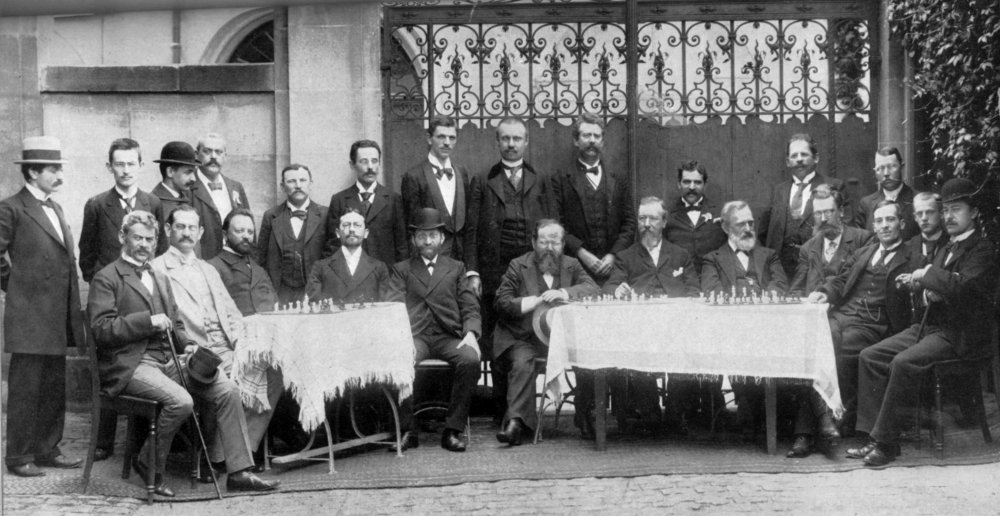
From 1893 onwards he played in over 50 international chess tournaments. He won or shared first at Munich 1900 (the 12th DSB Congress), Coburg 1904 (the 14th DSB Congress), Ostend 1906, Stockholm 1906, Vienna 1908, Prague 1908, Hamburg 1910 (the 17th DSB Congress), and thrice in the Trebitsch Memorial in Vienna (1911, 1912, 1913).
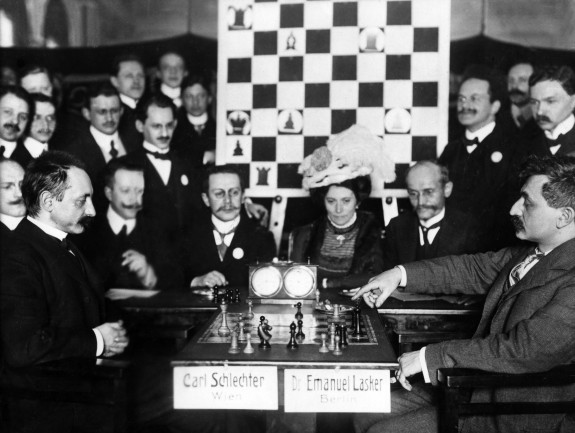
In 1910 Schlechter played a match against Emanuel Lasker for the World Chess Championship (in Vienna and Berlin). It is now generally accepted that Schlechter needed to score +2 to win the match and thus needed to win the tenth game. But in the tenth game tragedy struck: after first achieving a won game, Schlechter blundered into a clearly drawn position, and then blundered again which led to his loss of the game. The match ended tied at 5–5 (+1 −1 =8) and Lasker retained his title. (For match details see World Chess Championship 1910.) Schlechter distinguished himself as the first player in 16 years to seriously challenge Lasker's world title.
During World War I, he thrice won Trebitsch Memorial in Vienna. In the last year of his life, he took third in Vienna, lost a match to Akiba Rubinstein (+1 −2 =3), took second place in Berlin (Quadrangular, Milan Vidmar won), tied for third place in Kaschau, and took third place in Berlin (Quadrangular, Emanuel Lasker won). Schlechter died of pneumonia and starvation on 27 December 1918, and was buried in Budapest on 31 December 1918.