
Levenfish
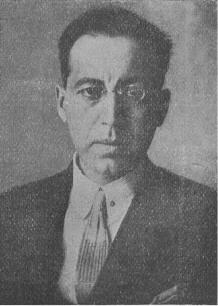

Grigory Yakovlevich Levenfish (21 March, 1889 - 9
February, 1961) Russian chess Grandmaster was at the top of his career in the
1920s and 1930s. He was twice champion of the Soviet Union. He also was a
recognized endgame specialist and chess writer.
He was born in Poland, which was part of the Russian
Empire, to a Jewish family. He spent most of his childhood in Saint Petersburg,
where he studied chemical engineering at Saint Petersburg State University.
His talent unfolded in winning the Saint Petersburg
Chess Championship in 1909, then took part in the Karlovy Vary Tournament in
1911, however, he was not very successful in the world-class field. At the age
of 22 he competed outside Russia and the Soviet Union for the first and last
time. His playing style was comparable to Chigorin’s. He achieved good results
in local tournaments in the following decade particularly in the Leningrad
Championship, where he finished first place in 1922, 1924 and 1925.
At national level he performed very well during the
Soviet Championships: he gained third place in 1920, second place in 1923, and
tied for first place in Leningrad in 1934. He became champion with an excellent
result (12.5/19) in Tbilisi in 1937.
In the strong Second International Moscow Tournament
in 1935 he tied for 6th-7th places with 10.5/19.
He drew a match with Botvinnik in 1937. His highest
estimated rating according to the Chessmetrics rating system was 2677 that he
achieved in February, 1939.
Despite his successes, Levenfish was practically
ignored by the Soviet chess authorities, which gave all support to the emerging
star and committed communist Botvinnik. It may be that he was discriminated
against due to his Jewish origin as he was the only person in the very strong
Soviet chess generation to whom payments were refused. It meant that he could
only afford a barely heated room in a dilapidated council letting. What was
worse, the government refused his request to travel abroad and take part in the
AVRO Tournament in the Netherlands in 1938 (despite the fact that he was the
reigning Soviet Champion). Other players, who were also born before the
revolution like Alekhine, Bogoljubov, Rubinstein and Nimzowitsch, could all
travel abroad even though they settled down in foreign countries. Deprived of
these possibilities Levenfish was obliged to play within the Soviet Union and
complete his earnings as an engineer in the glass industry. This resulted in
his retirement from professional chess.
The International Grandmaster title was awarded to him
in 1950 by FIDE.
As the game selections show, Levenfish virtually beat
all the significant Russian and Soviet players from the 1910s to the beginning
of the 1950s, as well as the World Champions Alexander Alekhine and Emanuel
Lasker.
Levenfish usually preferred the classical openings
such as the Ruy Lopez or Queen’s Gambit, however, from time to time he used the
hypermodern Grünfeld Defence or Nimzo-Indian Defence. He himself was engaged in
chess opening theories and one of the variations of the Sicilian Defence called
Levenfish Attack was named after him.
Sources: https://en.wikipedia.org; http://www.chessmetrics.com